Mar 29
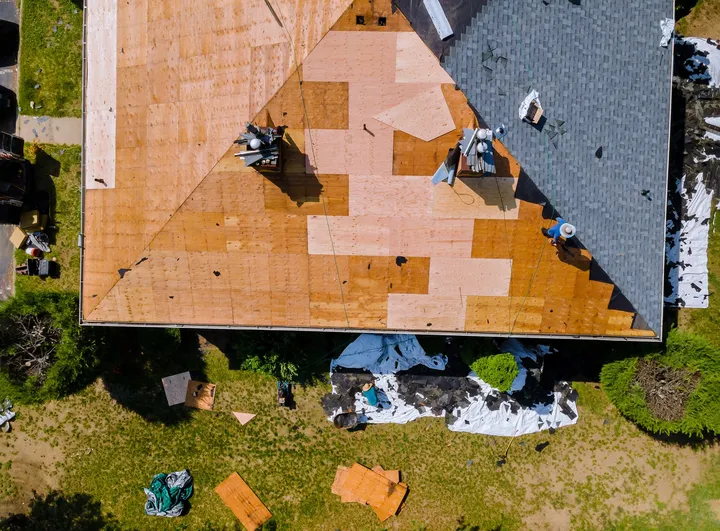
Replacing your roof? Read this first.
Having the roof replaced on your home or business can be a daunting hill to climb. Learn the key que...
Read full articleA photo-by-photo walkthrough of what hail damage actually looks like on asphalt and metal roofs — plus the size thresholds and timeline rules every Middle Tennessee homeowner needs to know.
Quick Summary
A photo-by-photo walkthrough of what hail damage actually looks like on asphalt and metal roofs — plus the size thresholds and timeline rules every Middle Tennessee homeowner needs to know.
Hail damage is sneaky. From the driveway, your roof can look perfectly fine while the shingles overhead have already lost the granules and asphalt seal that keep your home dry. This guide shows you exactly what hail damage looks like, what size hail does the harm, and how to confirm it without climbing a ladder.
Most roofing manufacturers and insurance carriers consider 1" diameter hail (about the size of a quarter) to be the threshold where functional damage starts on a 3-tab asphalt shingle. Architectural shingles tolerate a bit more — typically 1.25"–1.5". Aging shingles fail at smaller sizes because the asphalt mat becomes brittle.
Real hail strikes on asphalt shingles share a few signatures. If you see any of these, get a professional inspection before your filing window closes (most carriers allow 1 year in Tennessee, but evidence fades fast).
Metal roofs are durable but not immune. Hail damage on metal usually shows as round dimples or dents across panels — most common on standing seam pans and stamped metal shingles. Functional damage typically requires 1.5"+ hail, but cosmetic dents can void some manufacturer warranties and affect resale value.
Triumph uses Loveland Innovations drone imaging to safely inspect every slope of your roof. If we find damage, we'll document it and walk you through your insurance claim. If we don't, we'll tell you that too.
Hail bruises self-heal cosmetically. Granules that fell off in the storm wash away in a few months, and the exposed mat darkens with UV exposure, making damage harder to prove. Most Tennessee insurance carriers require a claim within 12 months of the date of loss — and the older the evidence, the harder it is to win.
Quarter-size hail (1") will damage most older or 3-tab asphalt shingles. Architectural shingles typically need 1.25"–1.5" hail to sustain functional damage. Anything golf ball-size or larger will damage virtually any roof, including metal.
Look for dents on gutters, downspouts, vent caps, and your AC condenser fins. Granule piles in downspout splash zones are another strong indicator. Visible shingle damage usually requires a ladder or drone inspection.
Most Tennessee homeowners insurance policies allow 12 months from the date of the storm. The sooner you file, the easier it is to prove. Evidence fades within a few months as granules wash away and the asphalt mat darkens.
If the inspection confirms functional hail damage and you are within your policy filing window, most homeowners policies pay for repair or full replacement (less your deductible). Cosmetic-only damage may be excluded under some policies.
You can do a ground-level check (gutters, downspouts, AC fins, granule piles) but climbing a roof is dangerous and you can cause damage that voids your claim. A professional drone inspection is free, safer, and produces evidence usable in a claim.
Round dimples or dents across panels — most visible in raking sunlight. Functional damage usually requires 1.5"+ hail, but cosmetic dents can still affect warranties and resale value.
Having the roof replaced on your home or business can be a daunting hill to climb. Learn the key que...
Read full article
The essential rules of roof maintenance including regular inspections, debris cleaning, post-storm c...
Read full article
Tennessee's matching law gives Franklin homeowners a powerful way to turn "patch jobs" into full roo...
Read full article